Why a Garage Gym Is Worth Every Dollar You Put Into It
A commercial gym membership costs between $40 and $80 per month for a basic facility, and premium gyms can run $100 or more. Over five years, that's $2,400 to $6,000 — before you factor in commute time, crowded equipment, and the mental friction of getting out the door. A garage gym eliminates all of that. You train on your schedule, with your equipment, in a space you control. Once it's built, it works for you indefinitely.
But a garage gym done wrong is just expensive clutter. The difference between a garage gym that transforms your training and one that becomes a parking spot for regret is planning. This guide walks you through every decision — space, flooring, equipment, budget — so you build it right the first time.
Planning Your Space Before You Buy a Single Piece of Equipment
The single biggest mistake people make is purchasing equipment before measuring their space. A power rack that looks compact in a product photo can consume 50 square feet once you account for safe usage clearance. Start with a tape measure, not a shopping cart.
Measure First, Then Map Your Layout
A standard two-car garage runs approximately 20 feet wide by 20 feet deep — 400 square feet total. A one-car garage offers roughly 200 to 250 square feet. Before committing to any equipment configuration, draw your space on paper at scale. Mark the location of the garage door, any windows, electrical outlets, and load-bearing posts.
Leave a minimum of 3 feet of clearance on all sides of any barbell or machine where you'll be moving. For treadmills and rowing machines, add at least 6 feet of clearance behind the machine. For ceiling height, check that you have at least 8 feet of clearance for overhead pressing or pull-up bars — 9 to 10 feet is ideal.
Flooring Is Non-Negotiable
Concrete floors are cold, hard, and unforgiving. Rubber flooring is the single most cost-effective upgrade you can make to a garage gym. Interlocking rubber tiles in 3/4-inch thickness run $1.50 to $2.50 per square foot and protect both your equipment and your joints. For a 200-square-foot gym footprint, budget $300 to $500 for flooring alone.
Under Olympic lifting platforms or power racks, consider 3/4-inch horse stall mats (typically sold in 4×6 foot sections for $40 to $50 each). They're dense enough to absorb dropped weight and durable enough to last a decade with no maintenance.
Ventilation and Climate Control
Garages are not conditioned spaces. In summer, concrete and metal absorb heat and turn your gym into an oven. In winter, a cold garage makes equipment harder to use and significantly increases injury risk from cold muscles. A wall-mounted mini-split HVAC unit ($700 to $1,500 installed) is the most effective long-term solution. For a lower upfront cost, a high-CFM box fan paired with a portable space heater handles most climates adequately.
Ventilation also prevents moisture buildup, which corrodes steel barbells and destroys flooring adhesive. If your garage has no windows, installing even one small exhaust vent is worth the effort.
Building Around a Strength Anchor
Every effective garage gym has a centerpiece — one primary piece of equipment that defines how you train and determines the layout of everything else. Choosing this anchor correctly is the most important purchasing decision you'll make.
Power Rack Builds
A power rack paired with a barbell and weight plates is the most versatile strength foundation available. A quality half rack with a pull-up bar, safety arms, and j-hooks occupies roughly 4×4 feet of floor space but supports squats, bench press, overhead press, pull-ups, and barbell rows — essentially the entire spectrum of compound strength movements. Entry-level racks from reputable manufacturers start around $400; commercial-quality units run $800 to $1,500.
The argument for a power rack is simple: no single piece of equipment delivers more training variety per square foot at this price point. If your primary goal is building strength, this is your anchor.
Functional Trainer Builds
If you prefer guided machine movements, cable-based training, or share the gym with family members who aren't interested in barbell work, a functional trainer or selectorized home gym is the better anchor. These systems offer a complete upper-body and lower-body training library in a compact, organized footprint. They're also significantly safer for unsupervised lifting, since there's no need for a spotter.
Newsletter
Get the latest SaaS reviews in your inbox
By subscribing, you agree to receive email updates. Unsubscribe any time. Privacy policy.
A functional trainer typically costs $1,200 to $3,000 for a quality unit, more than an entry-level rack setup, but the built-in structure is worth it for many home gym users who train alone.
Choosing the Right Cardio Equipment for Your Garage Gym
Cardio is where garage gym decisions get complicated. The options range from a $200 jump rope to a $4,000 treadmill, and the right choice depends entirely on how you actually train — not what looks impressive in a showroom.
Treadmills for Serious Running
If running is a core part of your training, a treadmill is worth the floor space. The category spans a wide range. The Sole F80 sits at the high end of the mid-range at around $1,800 and delivers a 3.5 CHP motor, a 22×60 inch deck, and a weight capacity of 375 pounds — all specs that hold up under daily use. For runners who want an immersive experience with live classes, the Peloton Tread offers a 23.8-inch HD touchscreen and seamless integration with the Peloton app ecosystem, though it demands a $44/month subscription to unlock its full value.
If budget is tighter but you still want a reliable machine, the NordicTrack Commercial 1750 regularly goes on sale in the $1,500 to $1,800 range and offers a 14-inch touchscreen, iFit compatibility, and a 12% incline combined with -3% decline — a feature set that no competitor matches at its price point.
Bikes for Low-Impact Cardio
Indoor cycling bikes occupy a small footprint (roughly 4×2 feet) and deliver an exceptionally effective cardiovascular workout with zero impact on joints. The Schwinn IC4 is one of the best values in the category at around $600 to $700, offering 100 levels of magnetic resistance, Bluetooth connectivity, and dual-sided SPD/toe-cage pedals. It's compatible with both Peloton and Zwift apps without requiring a proprietary subscription.
For those who want maximum intensity in minimal space, the Rogue Echo Bike is in a category of its own. Air resistance bikes scale infinitely with effort — the harder you push, the harder they push back. There's no motor to burn out, no electronics to fail. The Rogue Echo Bike costs around $1,200, weighs 127 pounds, and will outlast most other pieces of equipment in your garage. It's brutal, effective, and nearly indestructible.
Rowing Machines for Full-Body Conditioning
A rowing machine engages 86 percent of your muscles in a single stroke, making it one of the most time-efficient cardio tools available. It's also low-impact and genuinely demanding — a 20-minute rowing session at intensity competes with any other cardio modality. In a garage gym context, rowers also store vertically (most models), freeing floor space when not in use.
Garage Gym Budget Breakdown by Setup Type
There is no single right way to budget a garage gym. The table below outlines three realistic configurations with actual costs based on current market pricing. These are starting points, not ceilings.
| Setup Type | Key Equipment | Estimated Cost | Space Required | Best For |
|---|---|---|---|---|
| Minimalist Starter | Adjustable dumbbells, pull-up bar, resistance bands, rubber mats | $400–$700 | 80–120 sq ft | Beginners, small garages, tight budgets |
| Mid-Range Strength + Cardio | Half rack + barbell + plates, adjustable bench, mid-range treadmill or bike, flooring | $2,500–$4,500 | 200–300 sq ft | Dedicated home athletes with mixed training goals |
| Full Performance Build | Power rack, full barbell set, functional trainer, premium cardio machine, HVAC, premium flooring | $8,000–$15,000 | 350–500 sq ft | Serious lifters, two-car garage conversions |
The minimalist setup is often underestimated. A pair of adjustable dumbbells (10–90 lbs), a wall-mounted pull-up bar, and a set of resistance bands can deliver a complete upper-body and lower-body training program. The limitation is progression — you'll hit the ceiling of adjustable dumbbells sooner than you think if you're training seriously.
The mid-range build is where most home gym users end up after their first year. It's the sweet spot of investment versus capability, and it can always be expanded incrementally.
Storage, Lighting, and the Details That Make a Gym Usable
Equipment selection gets all the attention, but the details of a garage gym determine whether you actually use it consistently. A disorganized gym with bad lighting feels like a chore to enter. A clean, well-lit gym is inviting.
Storage That Works
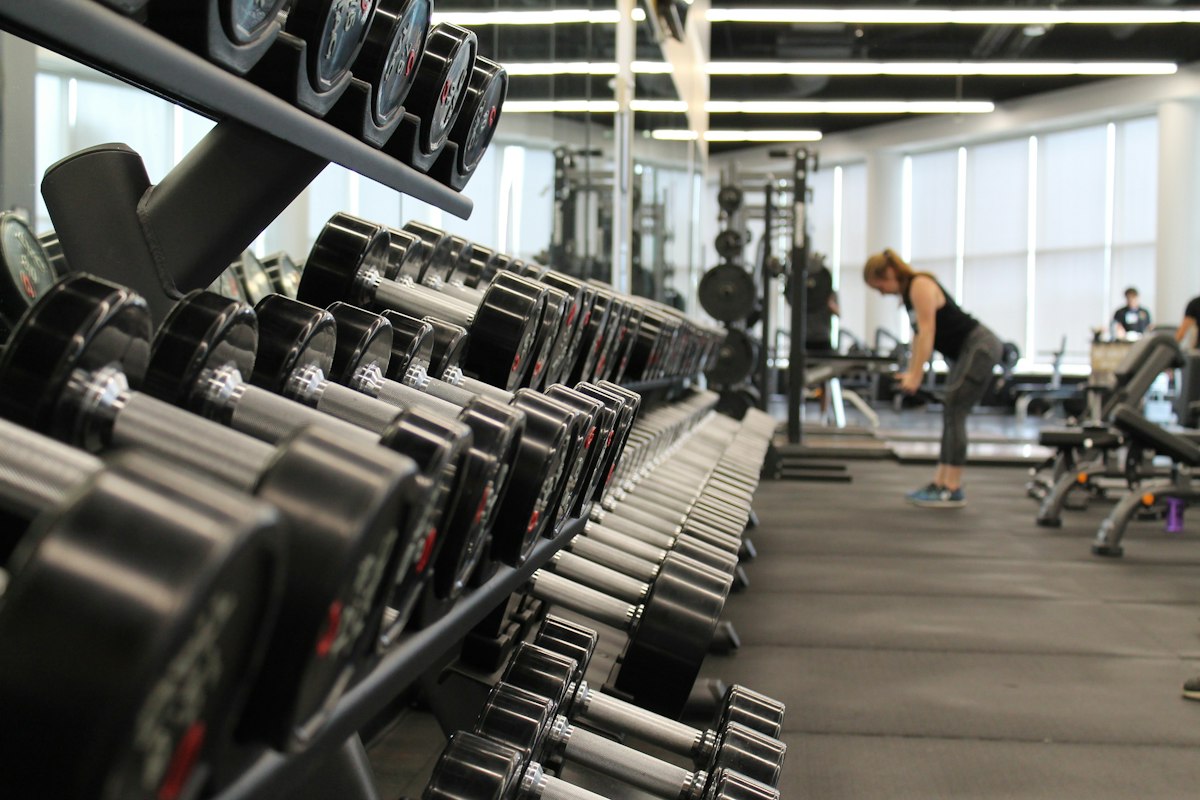
Wall-mounted storage is your best friend in a garage gym. Weight plate trees keep floor space clear and protect plates from damage. A wall-mounted barbell rack holds multiple bars vertically for $80 to $150 and keeps them out of walkways. Dumbbell racks should be positioned near a mirror, not in a corner — you'll use them more when they're accessible.
Cable management matters too. Extension cords running across the floor are trip hazards. Run outlet strips along walls and secure cables with adhesive clips. This is a $30 project that makes a meaningful safety difference.
Lighting
A single overhead bulb does not provide adequate lighting for a serious workout space. LED shop lights (4-foot, 5000K, 5000-lumen units) run $25 to $40 each and mount directly to ceiling joists. Two to four of these transform the feel of a garage gym completely. Bright, cool-white light also makes the space feel larger and helps with form checks in mirrors.
Mirrors and Motivation
A full-length mirror is not vanity — it's a training tool. Watching your form during squats, deadlifts, and overhead presses provides immediate feedback that prevents injury. Large acrylic mirrors for wall mounting run $100 to $200 and are shatter-resistant, making them appropriate for a gym environment.
Common Mistakes That Derail Garage Gym Builds
Knowing what not to do is just as valuable as knowing what to do. These are the mistakes that show up repeatedly in garage gym builds that don't reach their potential.
Buying equipment before planning the layout. A machine that doesn't fit the workflow of your space sits unused. Map the room first, then buy.
Skipping flooring to save money. Concrete floors cause joint pain on long cardio sessions and damage equipment. Flooring is the one area where cutting costs creates downstream problems.
Prioritizing equipment variety over quality. Five mediocre pieces of equipment is worse than two excellent ones. A solid rack and a quality barbell set will serve you better than a garage full of gimmick machines.
Ignoring temperature. A gym you don't want to enter because it's too hot or cold in six months of the year defeats the purpose. Climate control is an investment in consistency, and consistency is what drives results.
Building for a different version of yourself. Buy equipment that supports how you actually train right now, not how you imagine you might train. A boxing bag doesn't help if you never do cardio. A rowing machine is excellent — if you'll use it. Be honest about your habits.
A garage gym is one of the best investments a home fitness enthusiast can make. It removes every barrier between you and your workout. Built thoughtfully, with the right anchor equipment, proper flooring, and a layout that matches your training style, it will outlast any gym membership and deliver results that compound year over year.