Why Home Gym Equipment Maintenance Actually Matters
Most home gym owners buy equipment with the best intentions, use it hard for a few months, and then gradually stop paying attention to the sounds, smells, and quirks their machines develop over time. That treadmill belt that slips slightly? You compensate. The bike pedal that clicks every revolution? You ignore it. The cable that feels a little rough on the pull? You chalk it up to normal wear.
This is how $2,000 machines become $200 paperweights.
Here's the uncomfortable truth the fitness industry doesn't emphasize enough: neglecting maintenance doesn't just shorten equipment life — it creates safety risks, degrades your workout quality, and ultimately costs far more than any routine upkeep ever would. A treadmill running belt that snaps mid-run, a weight stack cable that frays and breaks, or a worn flywheel bearing that seizes on a spin bike — these aren't hypothetical worst cases. They're predictable outcomes of skipped maintenance schedules.
This guide breaks down exactly what you need to do, how often, and why — organized by equipment type so you can build a realistic maintenance routine for your specific setup.
The Most Damaging Maintenance Mistakes Home Gym Owners Make
Before getting into the specifics, it's worth naming the patterns that cause the most damage. These aren't obscure technical failures — they're systematic habits that quietly destroy equipment over months and years.
Waiting for Something to Break Before Acting
Reactive maintenance is the single most expensive approach you can take. By the time a motor burns out, a belt tears, or a bearing seizes, you're looking at repair costs that dwarf what preventive servicing would have cost. On commercial equipment, this principle is well understood — professional service companies consistently cite reactive-only maintenance as the leading cause of premature equipment failure. The same logic applies to your home gym, even if the stakes are slightly lower in terms of member volume.
The fix is simple in principle: set a calendar reminder, not a breakdown reminder. Monthly, quarterly, and annual checks take 20–30 minutes and prevent the kind of compounding damage that makes repairs economically unfeasible.
Skipping the Manufacturer Manual
Every serious piece of home gym equipment ships with a maintenance schedule. Almost nobody reads it past the assembly instructions. Manufacturers specify lubrication intervals, belt tension ranges, cleaning product restrictions, and torque specs for a reason — the people who designed the machine know exactly which failure points to watch. Ignoring this information is the equivalent of skipping oil changes because your car seems to be running fine.
Using the Wrong Cleaning Products
Harsh chemical cleaners, bleach-based wipes, and alcohol-heavy sprays damage upholstery, degrade rubber belts, corrode metal components, and strip lubricants from moving parts. This is a particularly common issue with cardio equipment, where users wipe down machines after workouts using whatever cleaning product is convenient. Use mild soap and water for most surfaces, and manufacturer-specified lubricants for mechanical components — nothing else.
Ignoring Environmental Factors
Garage gyms are especially vulnerable here. Temperature swings, humidity, and dust accelerate wear on every mechanical component. Rubber belts crack in cold, dry conditions. Metal corrodes in humid environments. Dust clogs motors and electronic components. If your gym is in a garage or basement, your maintenance schedule needs to be more aggressive than someone training in a climate-controlled room.
Cardio Equipment Maintenance: Treadmills, Bikes, and Rowers
Cardio machines have the most moving parts and the highest maintenance requirements of any home gym equipment category. They also tend to be the most expensive to repair when neglected.
Treadmill Maintenance
Treadmills are the highest-maintenance item in most home gyms, full stop. The running belt, deck, and motor are all interdependent — a misaligned or under-lubricated belt increases motor strain, which shortens motor life. This chain reaction is entirely preventable.
Belt lubrication is the single most important maintenance task for any treadmill. Most manufacturers recommend lubricating the belt-deck interface every 3 months or 40 hours of use, whichever comes first. Use 100% silicone lubricant — never WD-40 or petroleum-based lubricants, which damage rubber belts. Lift the belt edge, apply lubricant down the center of the deck, and run the belt at low speed for two minutes to distribute it evenly.
Belt alignment and tension should be checked monthly. A belt that drifts to one side creates uneven wear and can trip the safety system. Most treadmills have tension bolts at the rear roller — consult your manual for the correct adjustment procedure. Belt tension that's too tight strains the motor; too loose and it slips under load.
Popular machines like the Sole F80 and NordicTrack Commercial 1750 both include detailed lubrication schedules in their manuals, and both use standard silicone lubricant. The Horizon 7.0 AT uses a pre-lubricated deck that extends intervals somewhat, but lubrication is still required — just less frequently than most competitors.
Motor area cleaning should happen quarterly. Unplug the machine, remove the motor cover, and use compressed air to clear lint, dust, and debris from the motor compartment. A clogged motor runs hot and fails early.
Newsletter
Get the latest SaaS reviews in your inbox
By subscribing, you agree to receive email updates. Unsubscribe any time. Privacy policy.
Exercise Bike and Indoor Cycling Maintenance
Indoor bikes split into two distinct maintenance categories: belt-drive machines and chain-drive machines. The Peloton Bike and Schwinn IC4 are both belt-drive, which means lower maintenance overall — no chain lubrication required. Chain-drive bikes need chain lubrication every 2–4 weeks of regular use.
For all indoor bikes, check pedal tightness monthly. Loose pedals strip the crank threads, which is an expensive repair. Inspect the resistance mechanism quarterly — magnetic resistance systems are largely maintenance-free, but friction-based systems need pad inspection and occasional replacement. Check handlebar and seat post tightness before every ride; these loosen through vibration and are a genuine safety concern.
The NordicTrack S22i uses a magnetic resistance system, which significantly reduces mechanical maintenance compared to friction systems. The Rogue Echo Bike, as an air resistance machine, has a different maintenance profile entirely — the fan belt and drive chain need regular attention, and the belt tension should be checked every 6–8 weeks of heavy use.
Rowing Machine Maintenance
Rowing machines are generally the most forgiving category for maintenance, but they're not maintenance-free. The primary variables are drive chain or bungee cord condition, chain lubrication (for chain-drive models), and the condition of the seat rail and rollers.
Chain-drive rowers like the Concept2 RowErg need chain lubrication every 50 hours of use with chain oil — not WD-40, not 3-in-1 oil. A properly lubricated chain extends drive system life dramatically and prevents the rough, jerky pull feel that develops when lubrication is neglected. Water rowers like the WaterRower Natural require water treatment tablets every 6 months to prevent algae and bacterial growth in the water tank.
Seat rail cleaning is often overlooked but matters significantly for ride feel. Wipe down the rails and inspect the seat rollers for flat spots or debris quarterly. A sticky seat rail disrupts stroke rhythm and increases wear on the roller bearings.
Strength Equipment Maintenance: Racks, Cables, and Free Weights
Strength equipment is generally more forgiving than cardio machines, but cable systems and weight stacks have specific failure modes that demand regular attention.
Cable Machine and Functional Trainer Maintenance
Cable systems have two primary failure points: the cables themselves and the pulley bearings. Inspect cables monthly for fraying, kinking, or any visible wire damage. A frayed cable under load can snap without warning — this is not a "wait and see" situation. Replace cables at the first sign of significant fraying, regardless of whether they feel structurally sound during use.
Pulley bearings should be lubricated annually with a light machine oil or manufacturer-specified lubricant. Roughness or noise during cable travel is usually a bearing warning sign. Clean the weight stack guide rods quarterly and apply a thin coat of lubricant to keep the stack moving smoothly.
Power Rack and Barbell Maintenance
Power racks are structurally simple but need bolt torque checks every 6 months. Vibration from heavy lifts gradually loosens hardware — a loose rack upright is a serious safety hazard. Use a torque wrench and the manufacturer's specified torque values to re-tighten all structural bolts.
Barbells need occasional cleaning and bearing maintenance. Steel barbells develop surface rust in humid environments — clean with a nylon brush and light coat of 3-in-1 oil. Knurling packs with chalk and debris over time; a stiff brush cleaning after every few sessions keeps grip quality consistent. Bearings in quality barbells should be lubricated annually with a light oil.
Free Weights and Dumbbells
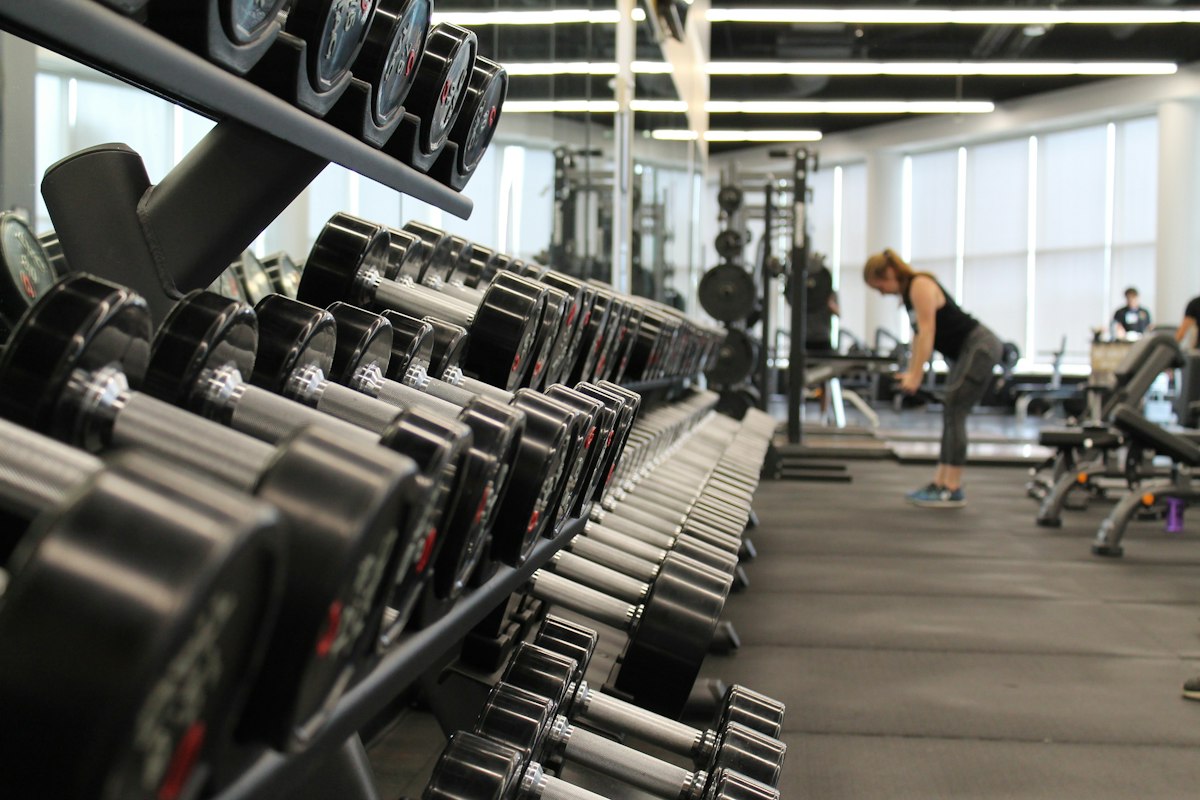
Fixed dumbbells and weight plates need less maintenance than any other category, but rubber-coated equipment degrades in direct sunlight and high heat. Store rubber-coated weights away from windows and heat sources. Inspect hex dumbbell welds annually for stress cracks — a failing weld on a heavy dumbbell is a foot injury waiting to happen.
Maintenance Schedule by Equipment Type
The table below consolidates recommended maintenance intervals across common home gym equipment. These intervals assume regular home use (3–5 sessions per week). Heavier use warrants more frequent attention.
| Equipment Type | Task | Frequency | Estimated Time |
|---|---|---|---|
| Treadmill | Belt lubrication (silicone) | Every 3 months / 40 hours | 15 minutes |
| Treadmill | Belt alignment & tension check | Monthly | 10 minutes |
| Treadmill | Motor compartment cleaning | Quarterly | 20 minutes |
| Indoor Bike | Pedal tightness check | Monthly | 5 minutes |
| Indoor Bike (chain-drive) | Chain lubrication | Every 2–4 weeks | 10 minutes |
| Rowing Machine (chain-drive) | Chain lubrication | Every 50 hours | 10 minutes |
| Water Rower | Water treatment tablet | Every 6 months | 5 minutes |
| Cable Machine | Cable inspection for fraying | Monthly | 10 minutes |
| Cable Machine | Pulley bearing lubrication | Annually | 30 minutes |
| Power Rack | Bolt torque check | Every 6 months | 20 minutes |
| Barbell | Cleaning & bearing lubrication | Annually | 20 minutes |
| All Equipment | Post-workout wipe down | After every session | 5 minutes |
How to Build a Maintenance Routine That Actually Sticks
The gap between knowing what to do and actually doing it is where most maintenance plans fail. A comprehensive maintenance checklist that takes 3 hours is a checklist that doesn't get done. Here's a practical framework for building habits that hold up over time.
Anchor Maintenance to Existing Habits
The most effective approach is linking maintenance tasks to things you already do. Post-workout wipe-downs happen naturally when cleaning supplies are stored at arm's reach near the equipment — not across the room or in a cabinet. Monthly checks are easier to remember when they're tied to a specific recurring event (the first of each month, the last Sunday before a new training block).
Keep a Simple Equipment Log
A basic log — a notes app, a whiteboard near your equipment, or a simple spreadsheet — tracking the last lubrication date, cable inspection, and any unusual sounds or behavior dramatically reduces the chance of maintenance intervals slipping by unnoticed. You don't need sophisticated software. You need a date and a note.
Build a Dedicated Maintenance Kit
Keep the following items in a single location near your gym: 100% silicone treadmill lubricant, chain oil for rowers and chain-drive bikes, a clean microfiber cloth, mild soap, compressed air, a basic wrench set, and a torque wrench. When everything is in one place, the barrier to actually doing the work drops significantly. A 10-minute cable inspection only takes 10 minutes when you're not hunting for tools.
Know When to Call a Professional
DIY maintenance covers the majority of preventive care, but some situations require professional assessment. Motor issues on treadmills, significant bearing noise on any machine, unusual resistance behavior on bikes with electronic resistance systems, and any structural concern on a power rack warrant a professional eye. The cost of a diagnostic service call is almost always less than a component replacement caused by a problem that was left too long.
If you own a premium machine like the Peloton Tread, Peloton offers its own service program — which is worth considering given the complexity of its electronic systems. For most other machines, local gym equipment service companies can handle diagnostics and common repairs. Always use manufacturer-approved parts when replacements are needed; third-party components save money upfront but can introduce compatibility problems and void warranties.
The Bottom Line on Home Gym Maintenance
Home gym equipment is a long-term investment, and like every long-term investment, it rewards consistent attention and punishes neglect. The machines that last 10–15 years in home gyms are almost never the most expensive ones — they're the ones that got regular lubrication, had their belts checked, and were kept clean and dry.
The maintenance tasks in this guide aren't complicated or time-consuming. The hardest part is simply building the habit of doing them on schedule rather than waiting for a squeak, a slip, or a failure to prompt action. Set the reminders. Keep the supplies handy. Spend 15 minutes a month so you don't spend $500 on a repair in year three.
Your equipment will perform better, last longer, and stay safer — and your workouts will be better for it.